Medicine Super-curriculars: How Exploring Medical Interests Strengthens Your Application
What Are Medicine Super-curriculars and Why Do They Matter?
Medicine super-curriculars are activities that deepen your academic understanding of Medicine beyond the school curriculum.
Unlike general extracurriculars, they show how you think about the subject, how you learn independently, and how you connect theory to practice.
Because Medicine is not taught as a standalone subject at school, medical schools are particularly interested in how students explore the discipline independently.
Medical Super-curriculars help students channel curiosity about Medicine, performing reflective engagement and establish answers to the following:
Is Medicine for me?
How does Medicine actually work in the real world?
What do doctors really do?
How does what I’m learning at school connect to human health and disease?
Medical schools are not simply looking for students who want to be doctors. They are looking for students who have begun to understand what Medicine involves scientifically, ethically, and socially.
Effective engagement with medicine super-curriculars can demonstrate the following:
Intellectual curiosity
Academic maturity
Reflection and insight
Motivation grounded in understanding,
All of this is crucial for responding to the UCAS personal statement questions:
Why do you want to study this course or subject?
What else have you done to prepare outside of education, and why are these experiences useful?
It can also link nicely to question 2 about how your studies have helped you. There may be a particular module or element of your A-Level course that sparked your interest in Medicine. Still, through super-curriculars, you’ve really taken that further in your own time and cemented Medicine as the course for you.
Join Underground Medics, our virtual club for aspiring medics:
Through discussion of medical research, ethics, case studies and current developments, students build critical thinking and analytical skills while connecting school science to real-world healthcare.
It also gives students regular material to reflect on in personal statements and interviews, grounded in genuine academic exploration rather than one-off experiences.

What Extracurricular Activities Do Medical Schools Look For?
Medical schools value super-curricular activities, including:
Academic exploration
Reading books, journals, blogs, or other publications
Attending lectures, watching documentaries, and going to exhibits
Entering academic competitions such as Olympiads or essay competitions
Gaining insight into healthcare systems and ethics
Work experience is an excellent way to gain these insights.
Such experience can be clinical, such as shadowing a GP or a hospital placement, or in other settings, such as care homes or charities, such as St John’s Ambulance.
You may also get involved in debating or philosophy to learn more about ethics.
Communication, leadership, teamwork
Any of the above experiences would allow you to develop these key skills for doctors, especially in customer-facing roles.
Team sports, extra-curriculars, and school leadership positions feed into this, too.
Evidence of sustained commitment
Prioritise depth over breadth
Medical schools are far more interested in students who engage deeply with a small number of medicine-related activities than those who sample many briefly.
Long-term engagement matters because it helps students develop insight, reflect meaningfully, and demonstrate academic maturity.
Commitment also reflects the realities of Medicine: it’s an intensive degree and a lifelong career.
They’re looking for students who can commit, persevere, and grow.
Finally, super-curriculars should test motivation, not just build a CV. They strengthen applications, but sustained exploration also helps students assess whether Medicine is genuinely right for them.
One of the strongest, most accessible ways to demonstrate genuine engagement with Medicine is through exploring a specific medical speciality.
Focusing on an area such as ophthalmology, neurology, paediatrics, pathology, or public health allows students to:
Test whether their interests align with real medical practice
Develop meaningful personal statement narratives
Discuss concrete examples at interview
Demonstrate independent, curiosity-driven learning
Importantly, this does not mean committing to a future career path. Instead, super-curricular exploration, such as the kinds mentioned above, demonstrates a willingness to engage with Medicine thoughtfully and in depth.
Case Study: Exploring Ophthalmology as a Medicine Super-curricular
Below is an example written by Rhea, an Oxford Medicine graduate and a U2 Tuition Medicine Mentor, illustrating how a student might explore a medical speciality well beyond the school syllabus. Her piece demonstrates intellectual curiosity and the ability to connect science learning to real patient outcomes, which medical schools love.
She explains how she discovered her interest was the eye, what her research and experiences taught her, and how curiosity-driven learning can translate into patient-centred medical insight and subject passion.
Looking Into The Eye
Why do I love the eye?
At school, learning about the structure and function of the eye felt like the perfect intersection between biology, physics and neuroscience. What appeared to be a small, delicate structure revealed itself to be remarkably complex. Each ocular structure plays a precise and essential role in vision- from the pupil and lens refracting and focusing light rays, to the retina which transduces incident light into electrical signs which the brain processes. As I progressed through medical school, my fascination only deepened as I explored retinal layers, phototransduction pathways, and the intricate communication between the eye and the brain.
Minds Underground Research Projects
These are a great way to explore a super-curricular interest, such as Ophthalmology.
Our mentors guide students through the research process from shaping questions to refining academic writing while keeping the focus firmly on independent thinking.
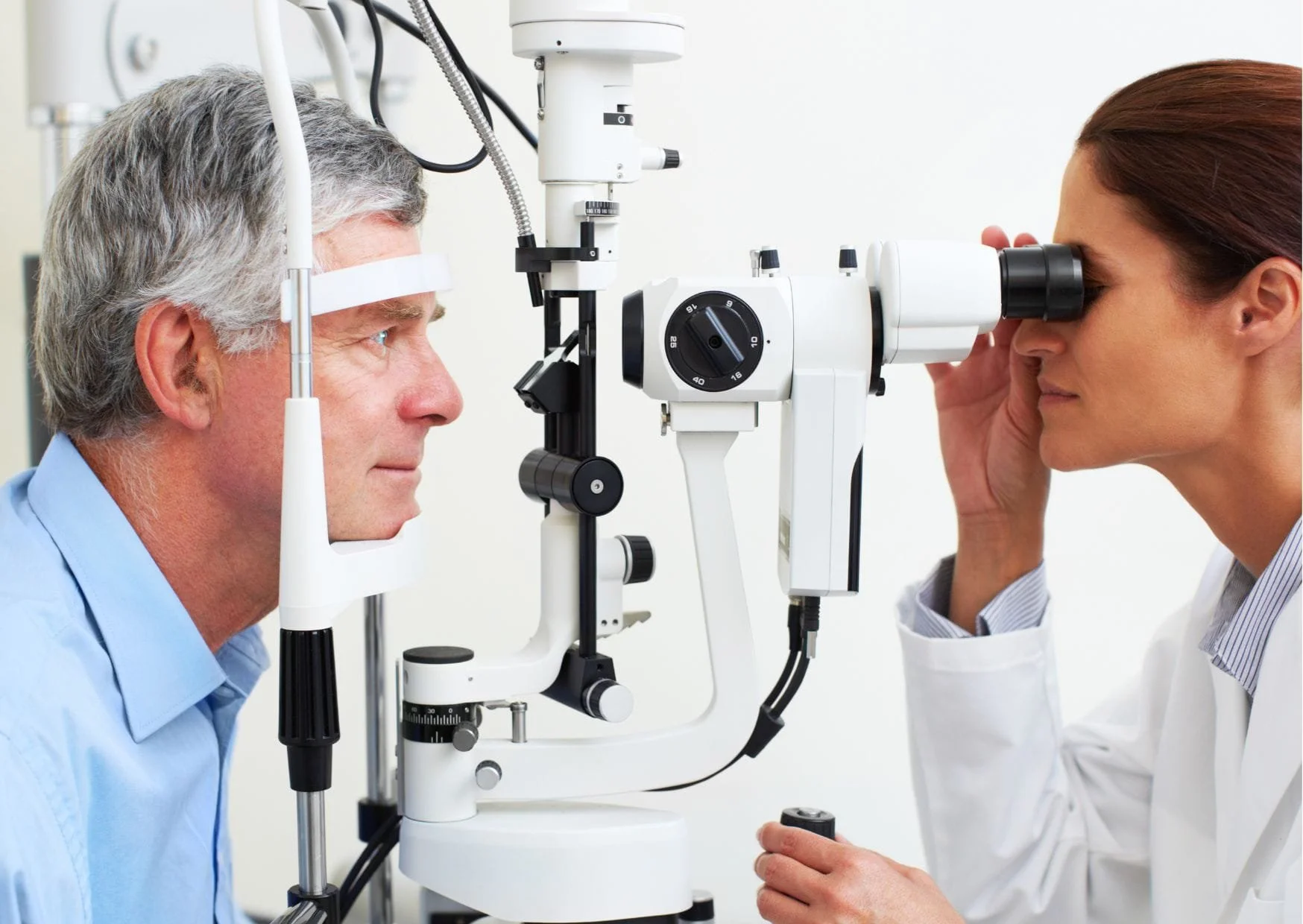
Students interested in ophthalmology, for example, might:
Write a research paper on the impact of screen use on eye health
Design a study examining visual strain in adolescents
Develop a design brief for glasses or digital tools aimed at reducing eye damage
Explore public health interventions or ethical challenges in access to eye care
What is Ophthamology?
Vision shapes the way we interact with our environment. Visual impairment can lead to numerous practical limitations, with profound psychological and social impacts. In children, visual impairment can also impact intellectual and social development. Diseases of the eye are a major cause of disability worldwide, associated with age and systemic conditions including diabetes, autoimmune diseases, infections and nutritional deficiencies. Ophthalmology is the field of medicine primarily focused on treating diseases of the eye.
Ophthalmology is a diverse and exciting specialty. Paediatric ophthalmologists manage neonates with retinopathy of prematurity and congenital diseases, whilst cataract and age-related macular degeneration (AMD) specialists manage more elderly patients. Ocular trauma might require emergency surgery, whilst glaucoma management involves careful adjustment of medications and long-term monitoring. Treating and reducing the incidence of chlamydia ocular infections with antibiotics, surgery and public health measures can significantly improve quality of life in low-income settings, and there is demand for permanent correction of refractive errors through laser eye surgery in higher-income settings. Whilst some patients might sadly lose an eye or their vision, preserving and restoring vision is extremely rewarding.
Subject Masterclasses: Deepening Your Understanding of Medicine
For students keen to explore Medicine in a more structured way, our one-to-one subject masterclasses offer the opportunity to work closely with an expert in a specific area.
Recent masterclass topics have included:
Stripping Back the Skull: Understanding the Brain
Genetic Engineering in Medicine
The Future of Medicine
Pioneering Digital Interventions in Public Health
The retina is the only part of the nervous system which can be directly visualised, providing a powerful window into health. Retinal changes could provide early clues to serious neurological pathologies including strokes and brain tumours, as well as reflect the severity of systemic diseases including diabetes and hypertension. We can examine the retina using tools such as ophthalmoscopes and specialised lamps, use cameras to take detailed photographs, and optical coherence tomography (OCT) to create high-resolution cross-sectional images of its layers.
Emerging advancements are rapidly transforming the field of ophthalmology. Artificial intelligence (AI) and machine learning has the potential to predict disease progression in AMD and glaucoma, helping with clinical decision making. Gene therapies are paving the way for treatments which target the underlying cause of previously incurable inherited retinal diseases. An exciting recent development is the PRIMA bionic eye implant, a 2mm x2mm microchip surgically placed under the retina. The implant converts light rays from specialist AI-augmented glasses into electric signals, which are naturally processed by the brain. This technology has the potential to restore meaningful vision in people with AMD, which previously had no treatment, with promising results from a recent trial at Moorfield Eye Hospital, London (October 2025).

Minds Underground’s Essay Competitions give students the chance to:
Explore medical topics they genuinely care about
Develop high-level research and essay-writing skills
Build confidence in constructing academic arguments
Conclusion
In this piece, I have explored the anatomy and function of the eye, the range of diseases which affect it, and the diverse job of an ophthalmologist. Ocular sciences and eye health make fascinating areas for medicine super-curricular reading because they combine anatomy, physiology, pathology, and cutting-edge technology, offering opportunities to connect classroom learning with real-world medical applications. In my view, studying the eye exemplifies how curiosity-driven learning can translate into practical and relevant patient-centred outcomes.

Our online Medicine Summer School brings together ambitious students from around the world to explore Medicine at the university level. The programme enables students to connect school science to real-world Medicine, while developing the confidence to discuss ideas in an academic setting.
How Minds Underground Can Help You Explore a Medical Specialism
As Rhea’s piece illustrates so clearly, Medicine is a rapidly evolving field. From AI and genomics to public health innovation, admissions tutors value students who stay up to date on medical developments, can explain why changes matter, and demonstrate awareness of ethical and practical implications.
At Minds Underground, we help students keep pace with the pace of change and explore Medicine well beyond the surface. Here are some of the ways we do this:
Medical Club
Weekly sessions introduce a wide range of medical topics and current developments, helping students spark interests, discover new areas of Medicine, and build a strong foundation for further independent exploration.
Research Projects
Fully personalised projects allow students to explore a specific medical question or field in depth, while developing high-level research, analysis and academic writing skills valued by medical schools.
Subject Masterclasses
One-to-one interactive sessions with subject experts enable students to discuss and critique key medical themes, develop analytical skills, and clarify where their interests lie and where to take them next.
Essay Competitions
Students hone research and essay-writing abilities by exploring medicine-related questions spanning ethics, innovation, public health and disease, with mentor support on research direction, structure and academic style.
Medicine Summer Schools
Our summer schools expose students to university-level medical thinking through interactive seminars, independent resources and guided discussion, while also offering insight into medical applications.

Contact us to learn more and curate your personalised super-curricular enrichment.
From Exploration to Application: Bringing Everything Together
Having established their medical interests, many students benefit from support with shaping reflections and super-curriculars into compelling narratives, positioning experiences effectively, and preparing for UCAT and interviews. Through our parent company, U2 Tuition, we provide access to expert Oxbridge-educated medics across a wide range of specialisms, including pathology, paediatrics, neurology and surgery, helping students bring everything together into a competitive UK medicine application. Book a complimentary 20-minute consultation to learn more about the support we can provide.